Feedzilla

Saturday, July 4, 2020

North Korea prevents COVID-19 making inroads


By Masood Sattar Khan
(Pakistan News & Features Services)

North Korean leader Kim Jong Un told a meeting of the politburo of the ruling Workers Party that his country had stopped the novel coronavirus from making inroads in the country, the state news agency KCNA reported on July 3. 

"We have thoroughly prevented the inroad of the malignant virus and maintained a stable anti-epidemic situation despite the worldwide health crisis, which is a shining success achieved," Kim Jong Un said in a statement carried by KCNA. 

He warned against self-complacency or relaxation in the anti-epidemic effort and urged North Koreans to maintain maximum alert. 

While North Korea has not confirmed any infections, its public health ministry has reported all 922 people checked so far have tested negative. Hundreds of people, mostly cargo handlers at seaports and land borders, are being regularly quarantined for monitoring. 

The politburo meeting on July 2 was held at a time when many hard-hit countries were easing lockdowns, even as the world moved quickly past the grim milestones of 10 million confirmed infections and 500,000 deaths. 

According to reports, North Korea has reopened schools but kept a ban on public gatherings and made it mandatory for people to wear masks in public places as part of its response to the coronavirus threat.

Expeditious completion of CPEC projects sought


By Masood Sattar Khan
(Pakistan News & Features Services)

Prime Minister Imran Khan has directed the completion of all projects under the auspices of the China Pakistan Economic Corridor (CPEC) expeditiously. 

He issued these directives while chairing a meeting to review progress of the CPEC projects in Islamabad on July 3. 

While appreciating the role of the CPEC Authority, headed by Lt General Asim Saleem Bajwa, the Prime Minister further emphasized that, upon completion, the dividends from these projects must reach to all Pakistanis. 

Imran Khan described the CPEC as an excellent initiative for Pakistan's socioeconomic uplift which would guarantee a bright future for the country. 

During the meeting, the Prime Minister was briefed in detail about the status of the various ongoing projects under the CPEC. Federal ministers Asad Umar, Makhdoom Khusro Bakhtiar and Omar Ayub Khan, Commerce Advisor, Abdur Razzak Dawood, CPEC Authority Chairman Lt General Asim Saleem Bajwa and senior officers of the organizations concerned attended the meeting.

India pushing for first COVID-19 vaccine by August 15


By Abdul Qadir Qureshi
(Pakistan News & Features Services)

According to some media reports, India is pushing hard to launch the first-ever COVID-19 vaccine by the name of Covaxin on its Independence Day on August 15. 

Although the experts have reckoned that the vaccine could take longer period to be developed and produced on technical grounds, there have been indications to beat the clock to align it with the celebrations of Independence Day. 

The project, a public-private venture between Bharat Biotech, the government-run Indian Council for Medical Research (ICMR) and National Institutes of Virology, is reported to have strong backing of the government. 

It has been learnt that Covaxin was cleared animal trials last week and the government has roped in leading health institutions to expedite clinical trials among humans. 

Bharat Biotech's BSL-3 high-containment facility for the manufacture of the inactivated polio vaccine will now be used for the COVID-19 vaccine.

Free mental therapy training for parents of special children launched


By Abdul Qadir Qureshi
(Pakistan News & Features Services) 

The Aga Khan University (AKU) has partnered with a range of organizations to launch free, online capacity building sessions for parents of children with mental health issues and developmental disorders whose treatment has been disrupted by the COVID-19 pandemic. 

The initiative brings together professionals from across the country including developmental paediatricians, speech and occupational therapists, child psychiatrists, paediatric psychologists and student volunteers.

The sessions will see parents receive training on how to deliver rehabilitative care and essential therapies at home if they are unable to access the usual support. For example, instructors will guide parents on how to provide therapies to help children with developmental delays to improve their functional independence, and assist parents in managing behavioural issues that have emerged during the pandemic. Direct sessions between therapists and adolescents facing psychological challenges will also be offered, emphasising on stress management techniques. 

“Children dealing with development delays or behavioural disorders need ongoing, special attention. This pandemic has widened disparities in access to essential mental healthcare and our initiative seeks to help parents continue therapy for their children at home,” Dr Ayesha Mian, associate professor of psychiatry at the AKU, remarked. 

Many people are suffering from feelings of fear and anxiety due to the uncertainty brought on by the pandemic. However, parents of children with special needs must also cope with the fear of their child’s development regressing due to the disruption in their therapy. 

“Children on the autism spectrum can regress and lose the gain they had made in speech therapy. Those with conduct disorders may become aggressive towards siblings or pets. Adolescent boys and girls may find changes in mood, sleep or appetite. Such behaviours may get worse with a gap in care,” Fatima Karim, one of the initiative’s lead organisers and a master’s degree student at the AKU, observed. 

“For a developing nation like ours, this initiative would be a game changer in terms of cost-effective provision of mental health support to all eligible children based on their needs rather than diagnostic labels. For professionals, this is an opportunity to equip themselves with innovative health care delivery skills and help parents support their children,” Dr Sidra Kaleem Jafri, assistant professor of pediatrics and child health at the AKU, stated. 

Considering the need for such support for parents, Dr Sarah Saleem, professor of community health sciences at AKU and the principal investigator of the project, mentioned that the team hopes to continue the project until the lockdowns are eased. 

The initiative is part of a large coalition, Pakistan COVID Mental Health Response, which offers free mental health services through various programmes to those affected by distress during the pandemic.

The partners include AKU’s departments of community health sciences, psychiatry, and paediatrics and child health; Taskeen Health Initiative; Interactive Research & Development; Saaya Health Tech; and the Community Innovation Hub through Sehat Kahani. 

The programme is being supported by the British Asian Trust, CareTech and Cosaraf Charitable Foundation. Parents or guardians can book an appointment for free training sessions by sending an email to camh@aku.edu or by calling the helpline 021-37136019.

China urges India to avoid extending border dispute to business

By Masood Sattar Khan
(Pakistan News & Features Services)

China has urged India not to start new disputes as they will take measures to protect the interests of Chinese firms operating in India. 

The Chinese Foreign Ministry spokesperson made the statement in Beijing on July 3 in response to a series of actions taken by India against China. 

Zhao Lijian, the spokesman of the Foreign Ministry, stated that pragmatic cooperation between China and India was mutually beneficial and win-win while man-made obstacles to cooperation between the two countries violated the relevant World Trade Organization (WTO) rules and may also harm India's own interests. 

His comments came after a series of measures, such as banning 59 mobile applications developed by Chinese firms, were taken by the Indian government against China after border tensions between the two countries had boiled over in June. 

Media outlets even reported that the Indian officials were considering actions to stop the Chinese companies from participating in India's future highway projects. 

There were also rumours doing the rounds that a Chinese company may not be allowed to become the title sponsors of the Indian Premier League (IPL), rated as the richest franchise-based T20 cricket tournament of the world. 

In response to a question, Zhao remarked that China and India were engaging in dialogue on easing the situation through military and diplomatic channels and neither side should take any action that may complicate the border situation. 

As the two countries' border conflict eased, the Indian Prime Minister Narendra Modi visited a forward post in the border region of Ladakh on July 3.

Friday, July 3, 2020

New trial suggests revision for global pneumonia treatment guidelines

By Abdul Qadir Qureshi
(Pakistan News & Features Services)

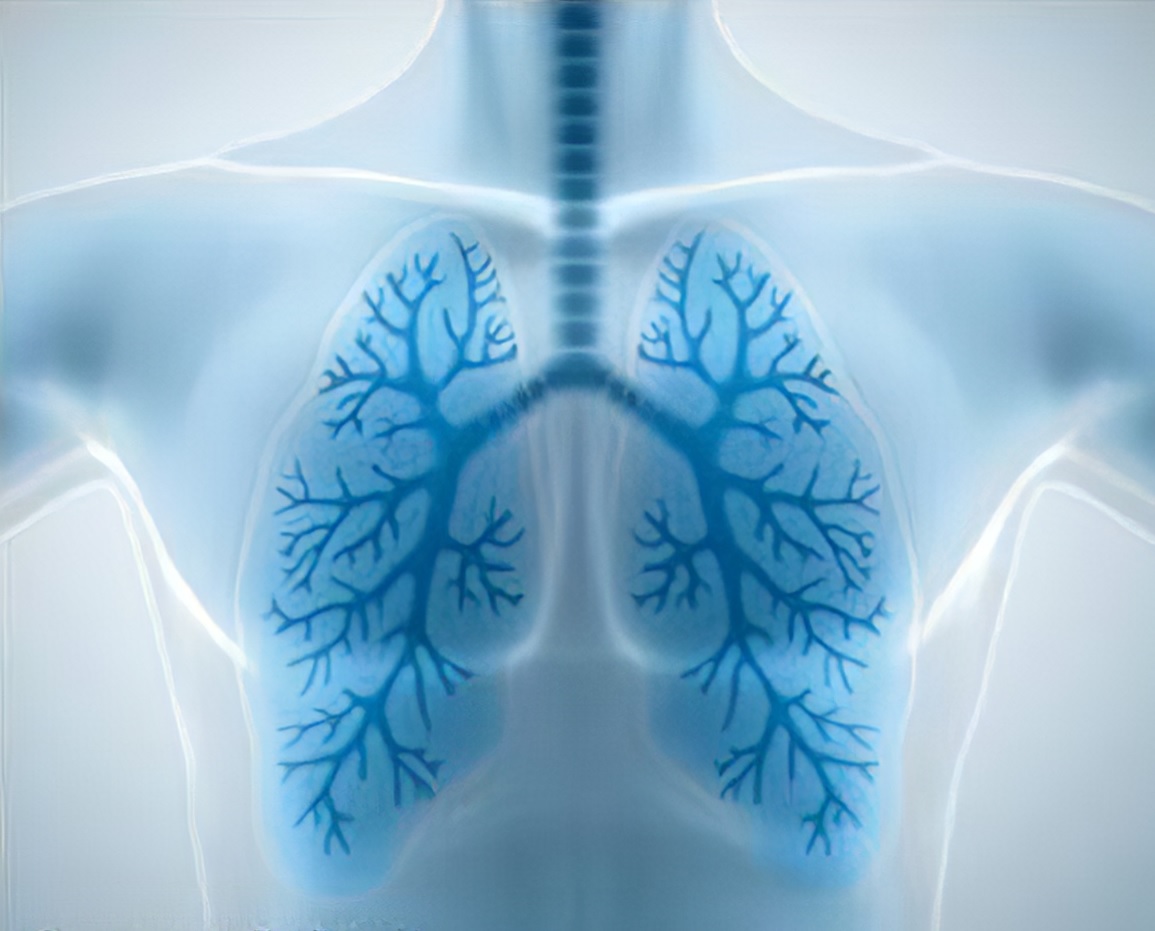
A new study by researchers at Aga Khan University (AKU), Karachi, has highlighted the need to improve ways to diagnose and treat pneumonia, a leading cause of death in children under five around the world. 

The Pakistan-based study, RETAPP, is the world’s largest community-based assessment of the use or withholding of antibiotics in children with mild pneumonia. Pneumonia is a lung disease caused by viral or bacterial infections. It is especially common in low and middle income countries like Pakistan where malnutrition is prevalent and vaccine coverage is low. 

There are currently different views on the use of antibiotics for treating the diseases. While global guidelines recommend the use of antibiotics, two leading infectious diseases societies in North America, the Pediatric Infectious Diseases Society and the American Society of Tropical Medicine & Hygiene, advise against the use of antibiotics in young children with mild pneumonia. 

The Pakistan-based trial followed over 4,000 children and found that antibiotics needed to be given to 44 children diagnosed with mild pneumonia, under global guidelines, in order to prevent a single child from deteriorating. This raises the risk of antibiotic resistance among children who are not suffering from pneumonia. 

The researchers noted that one of the primary symptoms to diagnose mild pneumonia in children as fast breathing is not specific to pneumonia and can be seen with other illnesses such as fever and dehydration. This often leads to misdiagnosis or misclassification of the illness leading to antibiotics being used in too many cases.

“Resistance to commonly used antibiotics is a growing concern among infectious disease specialists and other physicians. Our findings lend weight to global efforts to reduce the unnecessary use of antibiotics by highlighting that we are yet to understand the symptoms of pneumonia,” Dr Fyezah Jehan, the study’s lead investigator and a specialist in paediatric infectious diseases at AKU,” noted. 

The researchers also stressed the need to reconsider prevailing thresholds of breaths per minute required to qualify for a pneumonia diagnosis, in order to better identify children who need antibiotics. They added that other factors such as fever and wheezing can also help recognise children at risk of worsening symptoms of pneumonia. 

The study by researchers at the AKU, Uppsala University and the Bill and Melinda Gates Foundation has been published in the New England Journal of Medicine, NEJM, the most highly cited medical journal in the world. 

Other health researchers writing in an associated commentary in the NJEM said: “These important trials conducted by Jehan et al. and Ginsburg et al. have contributed to our current knowledge, yet many gaps remain in our understanding of the appropriate management of pneumonia and deserve greater attention.” 

The study’s objectives are aligned with targets under Sustainable Development Goal 3 that call for efforts to reduce preventable deaths in children under the age of 5 from infectious diseases such as pneumonia. An international data safety and monitoring board oversaw the study. Rigorous safety procedures were put in place throughout the trial to protect children from harm. 

The co-authors on the paper include Dr Imran Nisar, Salima Kerai, Dr Benazir Balouch, Najeeb Rahman, Nick Brown, Arjumand Rizvi, Yasir Shafiq and Dr Anita Zaidi.

Mirpur University's renovated library facilitating 3,000 students


By Masood Sattar Khan
(Pakistan News & Features Services)

The Azad Jammu and Kashmir (AJK) President, Sardar Masood Khan, has expressed determination to turn the public sector universities of the liberated territory into hubs of modern knowledge.

"It is our passion to transform AJK universities into centres of excellence. Our students should be prepared to serve not only AJK and Pakistan but all over the world," he stressed. 

He expressed these views while addressing the participants at the inauguration ceremony of the administration block and central library at the Jarikas Campus of Mirpur University of Science and Technology (MUST) in Mirpur on July 2. 

The event was attended among others by the Executive Director of the Higher Education Commission (HEC), Dr Fateh Mohammad Marri, the AJK Minister for Power Development Organization, Chaudhry Rukhsar Ahmed, former Minister Chaudhry Mohammad Saeed, Vice Chancellor Prof Dr Maqsood Ahmed, and former Vice Chancellor, Prof Dr Habib ur Rehman.

The President said that the AJK has the most literate population of all of Pakistan and now this human resource was stepping into the realms of advanced technological and cutting edge disciplines like cloud computing, blockchain and nano technology. 

“We can easily become a growth engine and economic hub of Pakistan if our students are imparted with such disciplines,” he stated while appreciating the university administration for establishing a business incubator centre and holding job fairs, 

He hoped that the AJK universities will prepare their students to compete with their peers on the regional and global levels to tackle the ever-changing job market. 

“Academic excellence is not confined to one region and we should strive to compete with institutions in the region and international level,” he added. 

He directed the management and faculty to impart quality education of science and technology, business and research to the young generation so that they could not only demonstrate their skills in Pakistan and Azad Kashmir but also raise the image of their motherland on a global level. 

The AJK President unveiled the plaque of the admin block of the city campus and inaugurated central library, student services centre and the mosques built at a cost of 158 million rupees. 

Masood Khan, who is also the chancellor of MUST, commended the university administration for establishing a modern central library, mosque and the cafeteria within the shortest possible time, and directed to reserve a portion of the facility for an e-library to provide online facility of the library to the non-resident students. 

Earlier in his welcome address, Vice Chancellor MUST, Prof Dr Maqsood Ahmed, informed that the library was facilitating book reading for 3,000 students as it possessed two big multimedia sections, workshop rooms and study rooms at the complex. 

He also disclosed that international relations, physics and history have been initiated at Palandri campus while faculty of health and medical sciences including the department of pharmacy, physiotherapy and medical lab technology had been introduced at the city Campus of MUST.

Coronavirus Update: Infection rate rises again

By Mukhtar Alam
(Pakistan News & Features Services)

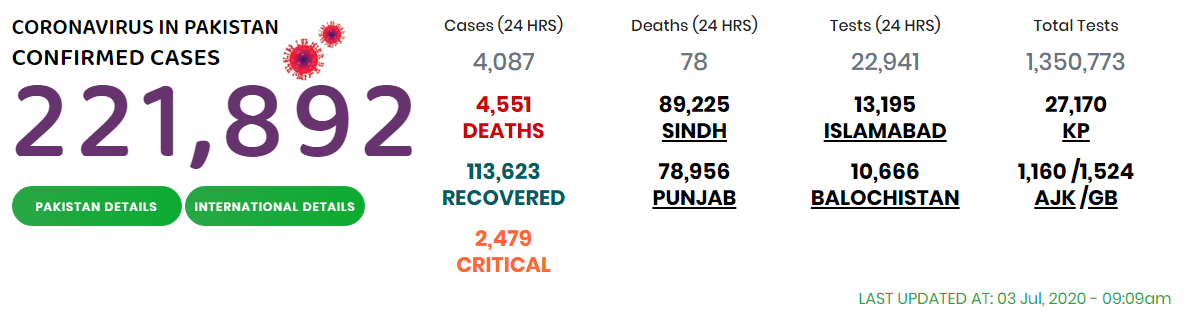
Sindh’s rate of daily COVID-19 infections was again on the rise as the health authorities confirmed 2,430 new cases on July 2, with 31 related deaths, compared 2,139 new infections and 29 deaths registered on July 1.

Overall, the provincial tally of infections soared to 89,225, with a total 1,437 deaths on July 12. During a period from June 26 to July 2, Sindh generated an average 2,008 cases of coronavirus infections and 37 deaths daily. 

Keen observers attributed the rise in the infection rate to increased testing of suspected samples but expressed concerns over the deaths, saying both the hospitals and the provincial health hierarchy should take the issue as a challenge. “Four months were enough to understand the dynamics of the lethal virus.” 

In the meantime, according to an official study, the number of samples taken for COVID-19 test was 4,072 on June 19, which gradually dropped to 1,890 on June 28. In view of the poor sampling and testing, as per an official source, the director general of the Sindh health services had asked 24 district health officers, including three of Karachi districts, on June 28 to explain their position for showing disappointing performance on their part. 

There were a few districts which showed zero number of sample collection, the source revealed.

In a letter to Sindh health secretary on June 28, the provincial health director general had submitted names of nine district health officers of grade 19s and 20s, saying he was under directions to request initiation of disciplinary proceedings against them. 

According to the daily COVID-19 summary issued by the Sindh health department on July 2 evening, Karachi districts collectively registered 1,700 new cases during the last 24 hours, followed by Hyderabad (89), Dadu 58), Ghotki (55), Thatta (51), Benazirabad (48), Tando Allahyar (47), Larkana (47), Naushero Feroze (41), Tando Mohammad Khan (37), Sukkur (37), Khairpur (37), Shikarpur (35), Sujawal (30), Matiari (21), Badin (18), Jacobabad (16), Jamshoro (19), Sanghar (15), Umerkot (13), Mirpurkhas (11), Tharparkar (2), Kambar Shahdadkot (1) and Kashmore (1).

Of the 31 COVID-19 deaths that occurred in Sindh during the last 24 hours ending at 9 am July 2, as many as 29 were reported from Karachi, including 20 men and 9 women. The deceased men were aged 35 to 94 years while women were in the age brackets of 55 to 75. In addition, a woman of 65 lost her life at Hyderabad, while a man, aged 77, died at Dadu.

As per the official report, 49,926 patients have recovered from the disease so far, while number of samples taken so far for COVID tests stood at 471,023.

Thursday, July 2, 2020

Shandong Export Online Fair launched


By Masood Sattar Khan
(Pakistan News & Features Services)

The Consul General of Pakistan in Shanghai, Hussain Haider, has said that online negotiation for international business will become a new normal as the COVID-19 pandemic dealt the events industry a blow.

Addressing the online launching of second round of the Shandong Export Fair being held in Jinan, he remarked that the exhibition demonstrated a creative way of engaging international business during the COVID-19 lockdown. 

Hussain Haider, Consul General of Pakistani Consulate General in Shanghai, Wang Zihai, President of Pakistan-China Joint Chamber of Commerce and Industry (PCJCCI), Iqbal Kidwai, Secretary-General of Pakistan Chemical Manufacturers' Association (PCMA), Muhammad Nadeem Zafar, vice president of Pakistan Hardware Association and others attended the online opening ceremony.

“The Online Fair has provided an opportunity for enterprises from Pakistan and China to do business with each other,” the Consul General asserted. 

He further mentioned that China has become Pakistan's largest trading partner, largest country of origin for imports, largest foreign direct investor and its third-largest export destination, while Pakistan has become China's largest investment destination in South Asia due to the construction of the China-Pakistan Economic Corridor (CPEC). 

The exhibition is being hosted by the Shandong Provincial Department of Commerce with Pakistani Consulate General in Shanghai, Pakistan Chemical Manufacturers' Association (PCMA) and Pakistan Hardware Merchants Association (PHMA) having extended support to the event. 

According to the event organizer, Inter Commerce Expo (ICEC), deals worth $2.94 million were agreed at the first round of 2020 Shandong Export Commodities (Pakistan) Online Exhibition, with 28 Pakistani enterprises being invited this May.

Freight service recognized as lifeline of Pakistan Railways


By Abdul Qadir Qureshi
(Pakistan News & Features Services)

The Divisional Superintendent Karachi of Pakistan Railways, Arshad Salam Khattak, paid a visit to the Marshalling Yard in Pipri, the hub of freight activities in the country, on July 1. 

He was accompanied by all the Deputy Divisional Superintendents as well as divisional officers of various departments. 

The DS was briefed, at length, about the operational preparedness and requirements. He urged the officers for planning their assignments while keeping in view the enhancement of Railways' freight business. 

"Freight service is the economic lifeline of Railways and its further expansion is need of the hour which can be done by properly planning the affairs,” the DS remarked on the occasion. 

Arshad Khattak added that the continual freight train operation during the eight-week long unprecedented suspension period of passenger train operation manifested the indispensible role played by freight service.

He also praised the role of workers in the Marshalling Yard for their relentless services in running the wheels of freight trains. 

The DS took stock of maintenance of Signalling System and advised preparing proposals of all the essential projects in the Marshalling Yard for onward submission to Railways Headquarters along with recommendation for their inclusion in federal government's Public Sector Development Programme, PSDP. 

Arshad Khattak also went around the loco shed, running room and all the related installations at the Marshalling Yard. The officers and staff working at different installations apprised the DS of the issues confronted by them in their operational duties. 

The DS directed for resolving all the issues of staff and workers at Marshalling Yard in order to ensure smooth functioning of freight activities.